If you’re looking for an Egyptian beach destination that’s underrated, untouched, and most importantly, where the main attraction isn’t the resort, then Marsa Alam should be on your radar.
The Red Sea destination is located in the South of Egypt, 260 KM (a little over 160 miles) away from Hurghada. It’s mostly known for its crystal-clear waters, vibrant coral reefs, and stunning marine life. There, you can snorkel with sea turtles, spot wild dugongs, swim alongside spinner dolphins, and more. That’s why snorkeling and diving in Marsa Alam are bucket list-worthy.
After years of sitting on my bucket list, I recently made it happen and solo road-tripped my way there. I spent my days exploring its iconic spots and remote corners and returned even more obsessed with the destination than I already was.
So, if Marsa Alam sounds like your cup of tea, or if it’s already on your list and you’re planning a trip there, look no further. I put together this extensive guide that covers everything you need to know before you go: where to stay, how to go, what to do, you name it.
This post may contain affiliate links, which means I will earn a small commission if you purchase through my link at no extra cost to you. Please see full disclosure for more information.
Planning Marsa Alam Last Minute? (TLDR)
- Best place to stay: Abu Dabbab Lodge (This is where I personally stayed and loved because I had access to Abu Dabbab Beach, which is home to an entire family of sea turtles).
- Best way to go: Rent a car if you’re a confident driver, or book a domestic flight if you’re tight on time and have the budget for it.
- Bucket list activities you must book: Swimming with dolphins in Sataya or Samadai, and snorkeling with sea turtles and dugongs in Marsa Mubarak.
- Don’t forget: travel insurance and an Egypt eSIM.
- Best time to visit: Spring (March-May) and Fall (October-November) are optimal for mild temperatures. However, the weather in both Summer and Winter is still great.
Where to Stay: Best Hotels in Marsa Alam
Understanding the geography of Marsa Alam is the key to making or breaking your experience there. It’s more spread out than what most travelers think; the town itself is pretty small, and the destinations and attractions are located miles away. So, renting a car or hiring a tour guide with a driver is an absolute must.
That said, almost all the best hotels in Marsa Alam are located on the main coastal road, not inside the small town. Here are some of my top recommendations:
- Abu Dabbab Lodge ($$) (Abu Dabbab)
- Wadi Sabarah Lodge ($$$) (Abu Dabbab)
- Marsa Shagra Village ($$$) (Abu Dabbab)
- Wadi Lahmi Village ($$$) (Abu Ghusun)
Marsa Alam Transportation: Getting Around and How to Get There
There are various ways to get from Cairo to Marsa Alam: you can book a domestic flight, take a bus, or simply drive. It’s a 7- 8-hour ride from Cairo, depending on where exactly you’re moving from and heading to. However, if you’re taking a bus, the ride is expected to take much longer. On the other hand, the flight from Cairo to Marsa Alam is only 1 hour and 20 minutes long.
Deciding which mode of transportation is best for you depends on your budget and schedule. I personally don’t recommend the bus as it’s such a long, exhausting journey. When I went there, I drove my car, and it honestly came in handy. But it’s worth mentioning that the last section of the route, right after Safaga, gets very confusing because there are 3 different roads. The older coastal roads aren’t even the best in terms of construction, and they’re two-way. So, if you’re not a confident driver, I think booking a flight would be best for you.

| ✈️ Flight | 🚌 Bus | 🚗 Driving | |
| Budget | $$$ | $ | $$ |
| Duration | ~1 hr 20 min | 8+ hours | ~7–8 hours |
| Pros | Fastest option; comfortable; avoids a long road journey; less stressful if you’re not a confident driver. | Cheapest option; no need to drive; convenient for budget travelers. | Flexible; you can stop along the way; having a car in Marsa Alam is useful for exploring. |
| Cons | More expensive; limited flight availability; you’ll need to arrange transportation once you arrive. | Long and potentially exhausting; less flexibility; can take significantly longer than driving. | Long drive; you need to factor in toll and gas expenses; requires confidence on the road; confusing section after Safaga; some coastal roads are older, two-way roads. |
| Best for | Travelers short on time or those who don’t want to drive. | Budget travelers who aren’t in a rush. | Confident drivers, road-trippers, or travelers planning to explore. |
| My take | Best if you’re not a confident driver. | Wouldn’t be my first choice. | My pick if you’re comfortable driving. |
What’s trickier is getting around Marsa Alam and not getting there. The thing is, there are no taxis and no ride-hailing services, so it’s best to rent a car. If you’re not comfortable driving, you’ll need to hire a car with a driver, or book a tour through your hotel or an agency/third-party like Viator or GetYourGuide.
That’s why having my car came in handy during my time there, as I was able to explore certain destinations on my own. However, it’s worth noting that I’m used to driving through dirt roads in natural protectorates and solo road tripping across Egypt.
Best Things to Do in Marsa Alam
Between desert and beach activities, Marsa Alam is mostly known for the latter. The tranquil Red Sea destination offers world-class diving experiences to its visitors, due to its rich marine life and stunning coral reefs. Snorkeling and diving in Marsa Alam are like no other in the rest of the Red Sea destinations; what the reefs and beaches there have to offer are truly unrivaled.
Marine Adventures: Snorkeling and Diving in Marsa Alam
#1 Explore untouched reefs
The significantly salty water and its remarkable visibility make snorkeling and scuba diving in the Red Sea a truly exceptional experience. That, along with, of course, the stretches of stunning coral reefs and 1,000+ species of tropical fish. Divers from all over the world come to Egypt for its mind-blowing diving spots across the Red Sea, but Marsa Alam, in particular, holds a special place. It’s hands down the best destination in the entire country to visit for snorkeling and diving enthusiasts.

Here are the top dive sites in Marsa Alam:
- Abu Dabbab Bay: This shallow bay boasts colorful reefs and a variety of tropical fish, as well as rare sightings of dugongs. However, it’s mostly known for being home to sea turtles. This all makes Abu Dabbab the perfect location for snorkeling and intro dives.
- Umm Halhala (Garden Reef): An offshore coral garden that sits right outside the Abu Dabbab area, accessible via speedboat from the beach. This was hands down one of the most stunning reefs I could see as a beginner.
- Elphinstone Reef: Being famous for hammerhead and whitetip shark sightings in the fall, as well as vibrant corals that stretch as deep as 100+ meters (328+ feet), makes this a diving paradise. However, it’s more of an advanced divers’ site due to its depth and strong currents.
- Fury Shoals: An entire reef system down south, boasting a network of over 20 reefs and lagoons, making it another diver’s paradise.
- Shaab Samadai (Dolphin House): This lagoon is home to a pod of spinner dolphins where you can have magical encounters in a more protected setting.
- Shaab Sataya (Dolphin Reef): This southern reef is another home to spinner dolphins, but given its open water setting, encounters may be closer and with bigger numbers. There are wonderful coral reefs there worth seeing as well.
#2 Swim and Snorkel at Sharm El Luli (Ras Hankorab) and Abu Dabbab Beaches
Even though there are marvelous reefs and colorful fish at both beaches, making them lovely snorkeling destinations, the beach experience felt they deserved a point of their own. Aside from snorkeling, you can simply swim and chill at both Sharm El Luli and Abu Dabbab, but they each offer a different kind of experience and vibe.


| 🏝️ Sharm El Luli (Ras Hankorab) | 🐢 Abu Dabbab Beach | |
| Overall vibe | Wild and remote. | Comfortable, serviced, and lively. |
| Main attraction | The beach itself; white sand, turquoise water, and desert scenery. | Marine life, especially the sea turtles. |
| Beach | Stunning white-sand beach. | Wide sandy bay. Just as beautiful but more developed. |
| Water | Crystal-clear turquoise, generally shallow. | Calm, shallow, and sheltered. |
| Snorkeling | Beautiful corals and fish, accessible from shore. | Excellent shore snorkeling, especially around the seagrass and reefs. |
| Wildlife | Corals, colorful fish, and turtles may sometimes be spotted. | Turtles are the star of the show, even though the coral reefs and surrounding tropical fish are wonderful too. |
| Facilities | Very limited; much more of a natural beach experience. Relatively clean toilets and showers are available on-site, and towels are included too. | Full facilities: sunbeds, shade, food/drinks, toilets, showers, and snorkeling/diving services. |
| Crowds | Generally quieter and feels more remote, although it can get busy mid-day. | More likely to be busy. |
| Comfort | ⭐⭐ | ⭐⭐⭐⭐⭐ |
| Bring your own… | Water, food/snacks, towels, etc. Don’t count on finding everything there. | Less essential because facilities are available. |
| Budget | EUR 5 per person | EUR 20 per person |
#3 Snorkel with sea turtles and dugongs
This is hands down one of the main highlights Marsa Alam has to offer, especially for snorkelers and non-divers. Even if you can’t swim at all, you can still spot these astonishing sea creatures.
Thanks to Marsa Alam’s protected shallow bays, rich in seagrass meadows, which are what both species feed on, it’s home to families of sea turtles and rare dugongs (sea cows).

- Abu Dabbab Beach: Abu Dabbab’s protected waters are home to nesting and resident turtles. That’s why staying in Abu Dabbab Lodge, which gives you free access to the beach, is a great idea. That’s what I personally did, and I do not regret it one bit. The beach also offers vibrant coral reefs, tropical fish, and rare sightings of dugongs if you take a speedboat and go deeper into the sea.
- Marsa Mubarak: This sheltered bay has a unique ecosystem that makes a home for sea turtles and dugongs, making it one of the best places to spot both.
#4 Swim with spinner dolphins
Another magical sea creature Marsa Alam is known for is the spinner dolphin. Pods of those beautiful marine mammals can be found in various spots in the Red Sea. The top two destinations where you may see dolphins and swim with them are Shaab Samadai and Shaab Sataya. However, just like turtles and dugongs, dolphins are wild animals, and their sighting is never guaranteed.
Shaab Samadai (Dolphin House)
As I mentioned before, this lagoon is home to a pod of spinner dolphins where you can have magical encounters in a more protected setting than Sataya. Due to stricter regulations, snorkeling is restricted to designated areas and the dolphins’ resting zone is off-limits. Also, swimmers must wear life jackets regardless of whether or not they can swim.

Shaab Sataya (Dolphin Reef)
On the other hand, Sataya offers an open-water setting, so closer encounters are a possibility, and potentially with larger numbers. However, it’s worth noting that the journey to the southern reef is long and exhausting.
You’re expected to head out as early as 5:30 AM, depending on your operator and the location of your hotel; I was picked up at 6:00 AM, but we still had to pick up a couple of more people on the way. The first ride took 2 hours till we reached Hamata Port, and from there, we joined a larger group and hopped on a yacht. Then, we sailed for 2 more hours into the open water till we reached Sataya.
After two snorkeling sessions and lunch on the boat, we sailed back to Hamata Port, but the journey back was even more tiring because the water was too turbulent, so most of us got seasick. The journey back was probably 2 of the worst hours of my life because I was incredibly sick. But aside from the seasickness, long rides, and waking up early, it was all worth it. Because once you get in the water and see those magical creatures swimming by you, you’ll be in awe. It’s absolutely breathtaking!
| Shaab Samadai (Dolphin House) | Shaab Sataya (Dolphin Reef) | |
| Overall experience | More protected, structured, and regulated. | More remote, open-water, and adventurous. |
| Dolphin encounters | Magical encounters with spinner dolphins. | Potentially closer encounters and possibly larger pods. |
| Sightings guaranteed? | No; dolphins are wild animals. | No; dolphins are wild animals. |
| Setting | Sheltered lagoon | Open-water reef & lagoon |
| Regulations | Stricter regulations; snorkeling is limited to designated areas. | Less restricted than Samadai, with encounters taking place in an open-water setting. |
| Life jacket | Mandatory, regardless of swimming level. | Optional but mandatory for non-swimmers. |
| Getting there | Shorter boat journey. | ~2 hrs to Hamata Port and ~2 hrs by yacht to Sataya. |
| Total travel time | Much shorter | ~4+ hours each way from pickup/port journey, depending on your hotel and operator. I personally headed out at 6:00 AM and was back to my hotel at 7:00 PM. |
| Journey difficulty | Relatively manageable. | Long and potentially exhausting. |
| Best for | First-time visitors who want a dolphin encounter without having to travel far for it. | Travelers who want a remote, adventurous experience and don’t mind the journey. |
| Biggest downside | More restrictions around where you can snorkel | The long journey, early start and potential for seasickness. |
| My take | Better for those who want an easier option. | Better for the ultimate adventure. |
#5 Marvel at the mangroves in Qulaan


Qulaan beach is a serene lagoon located in Wadi El Gemal National Park, south of Marsa Alam. The site is famous for the iconic mangrove trees, an ecological marvel that thrives in saltwater. It’s the perfect spot to unwind after a long day, where you can sip on traditional Jabana coffee and chat with the native Ababda tribesmen while enjoying the view.
FUN FACT: Unlike most nomadic tribes that navigate the desert using the stars, the Ababda tribe actually uses the sun and wind direction to find their way.
#6 Take a dip in Al Nayzak
Al Nayzak is a unique natural rock pool located just a few miles south of Marsa Alam by the coast. Legend says that a meteorite hit the coast and created this geological marvel; hence the name, Al Nayzak, which actually means “meteorite” in Arabic. Most travelers like to make a quick stop at the hidden pool for a swim and some photos for the ‘Gram.
#7 Visit Hamata Islands
Dubbed “the Egyptian Maldives”, these pristine, uninhabited virgin islands feel straight out of an old Windows desktop background; millennials in the back, do you hear me?
They’re just a 40-50-minute boat ride from Hamata Port. Once you arrive, you can enjoy the raw, untouched nature by wandering on the white-sand islands and snorkeling at the vibrant reefs nearby. One of the islands you must not miss is Siyal Island.
Land and Desert Adventures in Marsa Alam
#1 Desert safari in Wadi El Gemal
Those who know me know that I’m a desert gal at heart, and I’d never pass up an opportunity to venture out in the vast Egyptian desert. But to me, Marsa Alam is more of a water-activities destination. However, as a tourist, it’s quite understandable if you feel like taking a break from the turquoise waters for a change of scenery.
If that’s the case, then you should go on a desert safari in Wadi El Gemal National Park for a taste of Marsa Alam beyond its beaches. The rugged desert landscapes, mountains, and valleys are sure to steal your breath away. It’s such a great place to experience the destination’s landscape and culture differently.
Depending on your tour, you can ride a quad bike, a camel, or an off-road car. Then visit a Bedouin village and enjoy traditional tea as the sun sets over the horizon. Personally, I hate quad bikes; they’re too loud, and I feel like they disrupt the natural environment. But that’s just one woman’s opinion; you’re entitled to disagree if that’s your cup of tea.
#2 Going for a stroll in Port Ghalib
For a more laid-back experience, you can spend an evening wandering around Port Ghalib. You might recognize it, as it’s also where you’ll go to ride a boat for some of the excursions.
Aside from boats, the marina is lined with cafés, restaurants, and shops as well. So, it’s a lovely place to grab an afternoon coffee or dinner, and enjoy a different atmosphere after a long day snorkeling.
How to See Marsa Alam’s Marine Life Responsibly
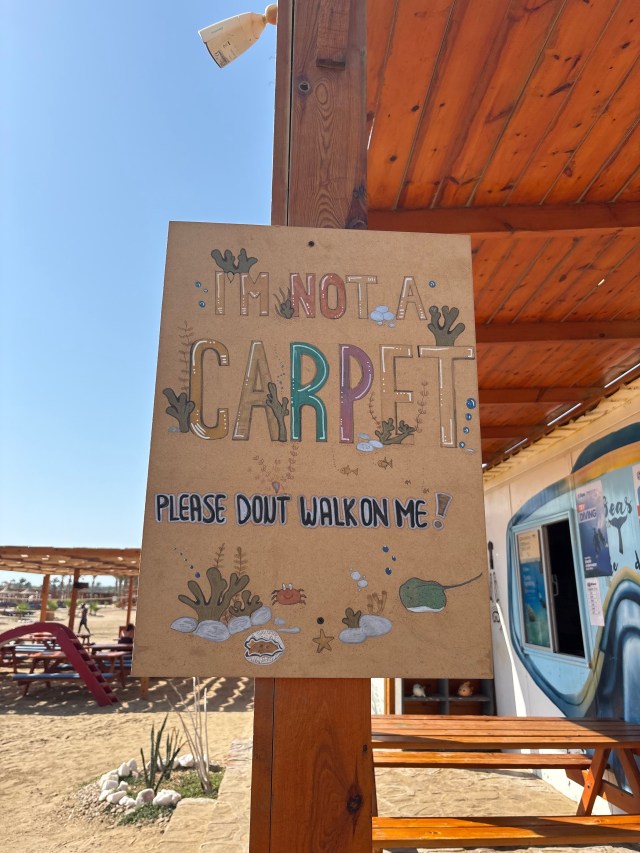
Honestly, one of the things I love the most about Marsa Alam is that responsible tourism and marine life conservation are taken very seriously there. As I mentioned earlier, getting to some of the region’s most beautiful destinations means driving through dirt roads and protected natural areas, rather than having them paved over and developed for mass tourism. The extra effort it takes to get there is actually part of what keeps these places feeling so untouched. And once you arrive, the strict regulations in place help protect the beaches, reefs, and marine life that make Marsa Alam so special in the first place.

To visit Marsa Alam and explore its stunning treasures, here are a few things to keep in mind to do so as responsibly as possible:
- When snorkeling with wildlife, enter the water calmly if you’re on a speedboat; don’t jump! Avoid making noise or sudden movements, in general, so you don’t scare them away.
- Don’t chase, touch, or feed wild animals like dolphins, sea turtles, or dugongs.
- Always keep a safe distance between you and the animals.
- Avoid blocking dolphins’ swimming direction.
- Don’t snorkel right above sea turtles, especially if you’re with a large group. Sea turtles will often swim up to the surface to breathe, and snorkeling above them can block their way.
- Don’t stand, touch, or damage corals with your fins or diving equipment. Even a small amount of damage, which may seem insignificant to you, can harm an entire fragile ecosystem.
- And of course, leave no trace behind. Don’t litter, and don’t collect seashells; these act as shelter for small sea creatures on the shore.
Where to Eat: Marsa Alam Food & Drink
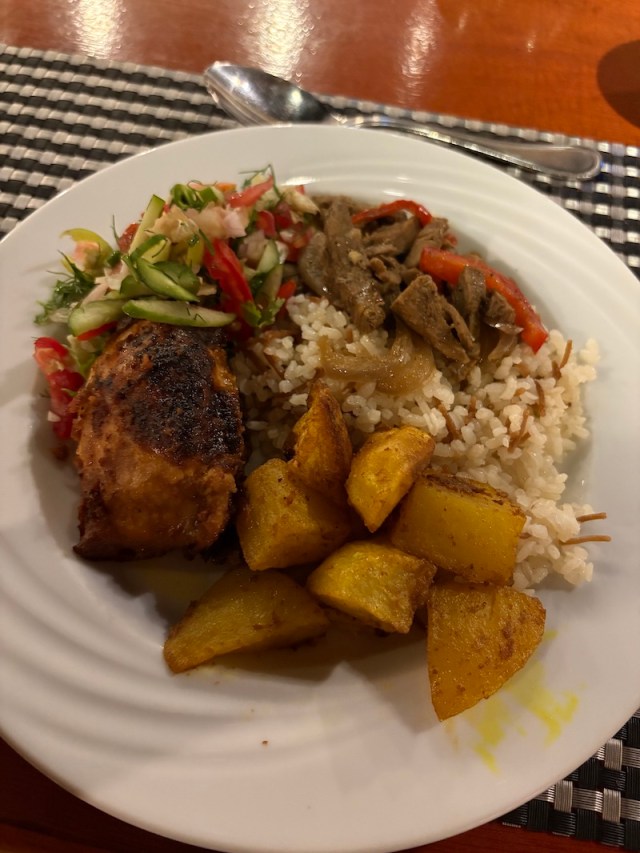
The fact that everything in Marsa Alam is spread out makes saving dining spots impractical, to be honest. One of the best things I’ve done was booking my accommodation with meals because after a long day of exploring and driving around, a ride to Port Ghalib, where most of the nice restaurants are, might either be too far or too exhausting.
PRO TIP: Don’t make the same mistake I made and book full-board accommodation; book half-board with breakfast and dinner instead. It’s very likely that you’ll miss lunchtime hours at your hotel, plus full-day excursions often include lunch anyway.
Solo Travel in Marsa Alam
Now, time for the million-dollar question: Is Marsa Alam a solo travel-friendly destination? Well, I wouldn’t say it’s a 100% solo travel destination, but it’s definitely doable on your own.
The reason why I’m saying it’s not a solo travel destination is that you’ll mostly encounter groups and couples there. As a solo female traveler, I haven’t come across anyone who was traveling by themselves other than me. However, this didn’t affect the quality of my trip whatsoever.

It’s just important to set the right expectations because it’s not the kind of destination where you’ll instantly connect with fellow solo travelers on the road. But if you’re open enough, you can always chat with the locals and other travelers joining the tours and excursions.
Speaking of tours and excursions, the ability to join existing groups by booking a tour online makes attractions so accessible and more affordable for solo travelers, as the cost is split over the whole group anyway.
Here are some of my top solo travel tips for Marsa Alam:
- Don’t expect a solo-travel social scene: Like I just mentioned, there aren’t any hostels or backpacker hubs where you’ll naturally meet tons of other solo travelers. So, if meeting people is important to you, join group excursions instead of relying on your accommodation.
- Choose your accommodation wisely: Marsa Alam is very spread out, as I said earlier, and some resorts can be quite isolated. If you’re traveling solo, it’s best if you stay somewhere with restaurants, activities, and easy access to tour operators. This is one of the reasons why I highly recommend staying at Abu Dabbab Lodge. There were several bars and restaurants on the beach, a diving center on-site, along with a bunch of other facilities.
- Arrange your transportation in advance: We’ve already established that Marsa Alam’s attractions are pretty spread out and that commuting can be tricky. So, if you’re not renting a car, figure out how you’ll get between your hotel, the airport, beaches, and excursion meeting points before you arrive. To get to your hotel safely, especially if you’re landing late at night, it’s best if you pay a little extra for an airport transfer.
- Ask your tour operator whether an excursion requires a minimum number of participants and how it affects its rate: Group excursions are usually more affordable for solo travelers; however, it’s important to consider that some activities or some operators may be priced differently if there’s a minimum number of participants. Always double-check beforehand to avoid any misunderstandings around pricing.

- Download offline maps: This one goes without saying anywhere, but it’s especially useful if you’re renting a car and visiting remote areas. Mobile coverage can be spotty once you’re away from the main resort areas.
- Carry cash: Sure, you will be able to pay by card at your hotel/resort and at its fancy facilities. However, cash will always come in handy for smaller local businesses or for tips. I paid mostly by card for my entire trip, but there were several occasions where I needed money, like when I had to pay for National Park tickets myself, or when I wanted to tip the housekeeper in my hotel.
- Let someone know your excursion plans: Always share your itinerary and plans for the day with someone you trust back home. Snorkeling and diving in Marsa Alam usually require signing a waiver as standard procedure; at the end of the day, adventure travel activities always come with risk. It’s a simple precaution, but it’s better to be safe than sorry, especially if you’re heading out somewhere remote.
- Put sea conditions into consideration: This one feels particularly relevant after my Sataya experience. Even if you’re not prone to seasickness, check the sea conditions before booking an excursion and ask your operator about the expected journey and its conditions. Some of these excursions, like the Sataya trip, involve hours on a boat in open water, and that can be a very different experience from a short snorkeling trip. In that case, even if you haven’t been seasick before, if the water’s turbulent and you’re not used to spending an entire day on a boat, you will most likely get seasick. That’s why it’s important to pack the right medication in your meds pouch before traveling.
Getaways and Day Trips From Marsa Alam
Being strategic with your itinerary is ideal to make the best of your trip to Egypt, in general. Marsa Alam might be far from Cairo, but it’s close to several must-visit destinations in Upper Egypt (what we call the south). You can either head to Marsa Alam after doing your Luxor and Aswan part of the trip, or vice versa, or maybe you can see them on weekend getaways or day trips from Marsa Alam. It all depends on your travel interests and itinerary.
El Quseir
The nearest city to Marsa Alam is El Quseir, and if you have the time, I highly recommend you pay it a visit. It’s not just another port town; it’s one of the oldest towns on the Red Sea that’s known for its history and authentic local culture. This is hands down a great place to visit for a more culturally immersive experience away from the major tourist hubs along the coast.
Luxor
Honestly, I personally believe Luxor is one of those Egyptian destinations that deserves a whole part of your trip, especially if it’s your first time in Egypt. I mean, you can’t travel all the way to this ancient land that’s thousands of years old without seeing the infamous temples and tombs, history buff or not.
However, if you’re short on time or if you’re mainly on a dedicated diving trip, it’s still worth visiting on a day trip. It will be a full, potentially tiring day, but I promise you you won’t regret it.

Dendera
The Temple of Dendera is one of Egypt’s hidden treasures, possibly because it’s located in Qena, a southern Egyptian city that’s not so well-known among foreigners. Dedicated to the goddess Hathor, the temple is one of the best-preserved in the country and one of the most stunning ones, making it absolutely worth the day trip.
Kom Ombo and Edfu
One of the reasons why I love the Luxor and Aswan Nile Cruise, and always recommend it over visiting each city on its own if you have the budget for it, is that you get to see the beautiful temples on the way. Those include the Temples of Edfu and Kom Ombo, the first one dedicated to the god Horus, and the latter dedicated to 2 Gods: Sobek, the crocodile god of fertility, and the falcon-headed Horus, god of the sky.
So, if you’re on a tight budget or have limited time and won’t be able to do the cruise, you can always visit both temples on a day trip from Marsa Alam.
Final Thoughts
So, is Marsa Alam worth visiting? Absolutely! If you’re anything like me and you’re a sucker for Mother Nature, Marsa Alam is guaranteed to blow your mind away. It’s particularly best for marine-life lovers and snorkeling and diving enthusiasts. The only caveat is that it can involve long excursions, early mornings, and a less developed version of the Red Sea. Which, when you really think about it, is part of what sets it apart.
Don’t Forget Your Travel Insurance!
Travel (solo or not) isn’t always rainbows and butterflies – things might go down south sometimes. You might fall ill or lose your luggage, and that’s when you’ll thank me for having your back covered with travel insurance.
SafetyWing offers different travel insurance packages, tailored to your needs, but their Nomad Insurance is my favorite option.
This travel medical insurance is perfect for frequent travelers. It covers lost checked luggage, travel delay, doctors, hospitals, and more. It even covers the COVID-19 emergency quarantine period if deemed necessary by a physician.
Explore SafetyWing’s Nomad Insurance Essential and Complete plans now.
OR REGISTER FOR FREE!
Booking a trip soon? Here are some useful travel resources:
- Book your flight with Skyscanner, Kiwi, CheapOair, or WayAway.
- Book your hostel with Hostelworld.
- Book your hotel with Booking.com.
- Get your travel insurance with SafetyWing.
- Hire a car with Skyscanner, Discover Cars, Rentalcars, or AutoEurope.
- Book your tours with Get Your Guide, Viator, Tiqets, or Klook.
- Download an eSIM from Airalo or Jetpac.
- Check out my trip planning tools for more travel resources.
Sharing is caring!
You might also like:
- El Gouna, Red Sea: How to Take in Egypt’s Hottest Beach Town
- Epic Things to Do in Dahab: Your Unconventional Guide
Meanwhile, if you like my content and would like to see more of it, subscribe to my newsletter here.

Nadine is an Egyptian curly-head who decided to quit the norm because it just doesn’t suit her. She ditched her 9-5 as a magazine editor to pursue her dream of becoming a full-time digital nomad and to inspire aspiring travelers to embark on their own solo adventures.