One of my earliest memories of Luxor isn’t my Nile Cruise experience with the family when I was a little kid; it was when I first learned about it in school. I was in fourth grade when my social studies teacher told us that Luxor was home to one-third of the entire world’s ancient monuments! Even as an adult, this fact never stopped blowing my mind. So, if you’re just as fascinated by this, this guide will walk you through all the best things to do in Luxor, the world’s greatest open-air museum. And to help you plan your Luxor trip with confidence, I’m also sharing where to stay, how to get around, and other essential tips to make the most of your time in this bucket list destination.
This post may contain affiliate links, which means I will earn a small commission if you purchase through my link at no extra cost to you. Please see full disclosure for more information.
About Luxor
Luxor, located in southern Egypt, which is known as Upper Egypt, is one of the most prominent destinations to visit, and you must add it to your itinerary. Like I previously mentioned, Luxor is considered the world’s greatest open-air museum as it boasts one-third of the world’s ancient monuments. But that’s not the only reason why it’s a must-visit.
Modern Luxor, which was once known as Thebes, used to be the capital of Ancient Egypt from the Middle Kingdom (c. 2055–1650 BC) onwards. Most of its significant monuments, though, were built during the New Kingdom (c. 1550–1069 BC), showcasing the destination’s great historical, religious, and political significance.

The Nile River divides Luxor into two sides: the East and West banks. The East Bank was a hub for worship and administration, as it’s home to two of the most important temples in Egypt, Karnak and Luxor temples. On the other hand, the West Bank was dedicated to the dead. In Ancient Egyptian culture, the sun setting in the west symbolizes the journey to the afterlife and rebirth. This is why Ancient Egyptians chose this area to build necropolises, mortuary temples, and tombs. Those include iconic archaeological sites like the Valleys of the Kings and Queens, and the Mortuary Temple of Hatshepsut.
Given its rich heritage and extraordinary history, Luxor and its necropolises were named UNESCO World Heritage Sites in 1979.
Where to Stay in Luxor, Egypt?
If you’re not visiting with a Nile Cruise, there are plenty of places to stay in Luxor if you’re flying in or going by train. Generally, I would recommend staying somewhere in the East Bank, especially if it’s your first time there, to be closer to the city center and the major attractions. The West Bank, on the other hand, boasts a variety of scenic stays, but they’re usually more secluded.
Book Your Stay in Luxor: East Bank
Book Your Stay in Luxor: West Bank
- Kemet House
- Malkata House – Boutique Hotel and Restaurant
- Djorff Palace
- Saray El Omda – Wellness & Retreat Village
Best Time to Visit Luxor
Since Luxor is located in Upper Egypt, which is in the South, the weather is hot year-round. That’s why it’s best to visit Luxor during the cooler months, from October to April. The best weather is in the winter months, from December to February, but this is also the peak season. Not just because of the great weather conditions, but also because Christmas break is foreigners’ high season, and locals’ high season is during the mid-term vacation, which takes place from mid-January to mid-February.
If you’d like to travel during the shoulder season, then aim to travel during the fall (October/November) or spring (March/April). Either way, avoid traveling to Luxor in the summer at all costs as it’s extremely hot during that time of year.
Getting Around in Luxor
#1 Taxi
The easiest way to get around is by hailing a taxi. Luxor is a small city, in comparison to Cairo, so taxis are quite affordable. One thing I did was when I felt comfortable with a driver, I took his number and called him in advance whenever I needed a ride. Having a couple of backup contacts would be smart, too.
#2 Walking
As I said, Luxor is a small city, so walking, at least on the East Bank around the center, is pretty doable. It’s also a great way of exploring the city.
#3 Carriage
This is one of the most popular things to do in Luxor. However, as I’m an avid animal lover, I try to only support such activities if they’re in no way endangering the animals or causing them any harm. As horses are considered service animals, I’d only choose to ride if their handlers are taking good care of them.
#4 Felucca
A trip to Egypt wouldn’t be complete without a felucca ride. And since Luxor’s East and West banks are separated by the Nile River, you will most likely take at least one ride to cross over to the other side. There are bridges, and you can cross over in a taxi, but the felucca ride is absolutely worth it.
Relevant Read: Sleeper Train, Talgo Train, or Flight – How to Go to Luxor/Aswan?
Luxor Solo Travel Safety
When I went to Luxor as an adult, I didn’t travel solo as I usually do, to be honest. Not because it’s not safe, but because I was traveling on my birthday with one of my close friends. However, we both felt absolutely safe the entire time as two girls traveling alone, and I would definitely travel there solo if I ever get the chance.
That said, if you’re solo traveling, there’s nothing to worry about as long as you’re vigilant and follow my tips. Here are some things to do in Luxor to travel safely:
- Be assertive: Luxor is one of the most touristy destinations in the world, so expect a lot of people trying to sell you something. Be it a ride, a tour, a souvenir, or even a photo. Persistent vendors are literally everywhere, and it can be very overwhelming. Just try to be patient, and if you simply don’t want the service or if you don’t want to stop for every single person, don’t be afraid to be firm. You can definitely do this without being rude. Two phrases that’ll come in handy are “Khalas”, which means “enough”, or “Laa Shokran”, which means “no, thank you”.
- Book your accommodation somewhere central if you’re traveling alone: as I mentioned earlier, the West Bank is a bit secluded, as everything is more spread out. So, if you’re a first-time solo traveler, it’s best if you stay in a well-reviewed area/hotel on the East Bank. The areas near the Karnak or Luxor temples, or the Corniche, are great options. However, if you opt for a laidback stay on the West Bank, make sure you book a reputable hotel or guest house that can arrange transfers for you.
- Avoid walking alone late at night: as I said, Luxor is generally safe, but it gets super quiet after 10 PM, especially if you’re staying on the West Bank. So, it’s best if you stick to well-lit areas or book a ride.
- Only use licensed guides and official transportation: For tours, you can either book through your hotel or a reputable agency. For the latter, I usually look up trusted experiences on Get Your Guide and Viator.
- Always agree on the price beforehand: Be it a taxi ride or a tour, always agree on the price first.
- Stay hydrated and don’t forget travel insurance: Luxor can get ridiculously hot even in the winter, when the weather is actually milder and safer to visit. So, dehydration and heat strokes are quite common. That said, carrying a reusable water bottle with you, applying sunscreen, and wearing a sun hat and/or sunglasses are some of the most important things to do in Luxor to stay safe. And in case anything goes wrong, it’s better if you’re insured; personally, I highly recommend SafetyWing’s Nomad Insurance as it’s both a medical and travel insurance. It also covers things like COVID, electronics theft, and adventure travel injuries.
- Contact the tourism police when needed: You don’t need the police only when it comes to emergencies. In Egypt, the tourist police can be quite helpful with scams, price disputes, or harassment. Their hotline is 126.
- Download an eSIM and stay connected: When traveling alone, I must always stay connected to the internet to be able to navigate safely or contact anyone if needed. That’s why I always download an eSIM; providers I recommend are Airalo, Jetpac, Nomad, Yesim, Drimsim, or Saily.
Relevant Read: How to Install an eSIM: A Step-by-Step Guide for Smart Travelers
Things to Do in Luxor: Top Attractions You Can’t Miss
#1 Karnak Temple
Visiting the Karnak Temple is one of my top things to do in Luxor, as it’s one of my favorite temples and archaeological sites in all of Egypt. It was even dubbed Ipet‑Sut, which means “the most esteemed of places” by the Ancient Egyptians themselves.
Located on the East Bank of Luxor, it boasts many temples and chapels, including the Great Temple of Amun. That’s why the temple’s priesthood held great importance and political power at the time. In addition to the Amun Precinct, there are also the Precinct of his wife, Mut, to the South, and the Precinct of Montu to the North, and to the East, Akhenaten’s Temple to Aten.


Karnak is known for the world-famous Avenue of Sphinxes, linking it to Luxor Temple, and the iconic Great Hypostyle Hall. But what some people may not know is that Karnak’s Great Temple of Amun is built to be oriented towards Luxor Temple as well. Like most Ancient Egyptian temples, it was built on an East-West axis. This was because these ancient models were meant to represent the cosmos, and their layouts meant that they mirrored the sun god Ra’s trajectory through the sky. However, the Temple of Amun also has a North-South axis, orienting it towards Luxor Temple.
Fun Fact:
One of my personal favorite highlights in Karnak is the giant Kheper Scarab statue by the Sacred Lake. In Ancient Egypt, scarabs (dung beetles) symbolized growth, rebirth, and transformation. People wore scarab amulets for good luck and protection; I personally wear a scarab pendant that I never take off!

Anyhow, the legend surrounding the iconic scarab statue in Karnak says that encircling it would bring good luck. Some claim you should do 3 laps, and others say 7. Some people also say 3 is for luck and 7 is for a baby! Others claim that 3 laps are for good luck, 7 for marriage, and 9 to get pregnant. How the ritual started isn’t clear, but people still do it for fun to this day anyway, and it’s super popular amongst tourists!
Opening hours: 6 AM – 5 PM
P.S. Opening hours may vary from one season to another, or during holidays and the holy month of Ramadan.
Tickets:
- Foreign adults: EGP 600
- Foreign students: EGP 300
- Egyptian/Arab adults: EGP 40
- Egyptian/Arab students: EGP 20
P.S. Prices are always subject to change, so always make sure to double-check the Ministry of Tourism and Antiquities’ official website before your trip.
#2 Luxor Temple
Unlike most Ancient Egyptian temples that were built on an East-West axis, Luxor Temple was oriented towards Karnak Temple, which is 3 kilometers away. This is because Luxor Temple played an integral role in one of Ancient Egypt’s significant celebrations, the Opet Festival. During this annual grand ceremony, the sacred statues of the god Amun, his wife Mut, and their son Khonsu were carried from their temples in Karnak to Luxor Temple along the Avenue of Sphinxes. This journey was carried out so that the triad could visit Amenemopet, the deity worshipped at Luxor Temple.

Luxor Temple was built and expanded over several centuries by multiple rulers, with its earliest structure dating back to Queen Hatshepsut’s era. On the other hand, the main body of the temple, as well as the Great Colonnade, was constructed during the reign of Amenhotep III. Ramesses II also made multiple significant additions, including the massive entrance pylon, colossal statues, and two obelisks, one of which now stands at the Place de la Concorde in Paris.
During the Roman Empire’s rule, they transformed parts of the temple into a military fort, covering original walls with plaster and painting over them in Graeco-Roman style. The reliefs, depicting Emperor Diocletian and his 3 co-regents, had largely disappeared but can still be seen.

Opening hours: 6 AM – 8 PM
P.S. Opening hours may vary from one season to another, or during holidays and the holy month of Ramadan.
Tickets:
- Foreign adults: EGP 500
- Foreign students: EGP 250
- Egyptian/Arab adults: EGP 40
- Egyptian/Arab students: EGP 20
P.S. Prices are always subject to change, so always make sure to double-check the Ministry of Tourism and Antiquities’ official website before your trip.
#3 Mortuary Temple of Queen Hatshepsut
As I previously mentioned, the West Bank of Luxor was dedicated to the dead. That’s why Queen Hatshepsut (c.1473–1458 BC) built a magnificent funerary temple at el Deir el-Bahari, on the West Bank of Luxor.
The complex wasn’t devoted solely to her; the temple also includes sections for the cults of her father, Thutmose I, the goddess Hathor, and the funerary god Anubis. An altar, open to the sky and the sun, was also dedicated to the cult of Ra, and the Sanctum Sanctorum was given to Amun.

Opening hours: 6 AM – 5 PM
P.S. Opening hours may vary from one season to another, or during holidays and the holy month of Ramadan.
Tickets:
- Foreign adults: EGP 360
- Foreign students: EGP 180
- Egyptian/Arab adults: EGP 40
- Egyptian/Arab students: EGP 20
P.S. Prices are always subject to change, so always make sure to double-check the Ministry of Tourism and Antiquities’ official website before your trip.
#4 Valley of the Kings
The West Bank’s funerary association is the reason why the Valley of the Kings, a royal burial site, was located on the Western side. Powerful kings of the 18th, 19th, and 20th dynasties of the New Kingdom (c.1550-1069) were buried there. However, unlike what the site’s name suggests, the valley wasn’t just limited to rulers. Some members of the royal family, aside from the kings, were buried there as well, as were a few non-royal, though very high-ranking officials.


There are over 60 tombs at the archaeological site; however, the ticket grants you access to 3 tombs of your choice. There are also extra special tombs that you need to pay extra for. From the tombs that were open at the time of my visit, I chose the tombs of Ramesses III, Ramesses IV, and Merenptah to see. I also paid extra tickets for the tombs of Ramesses V & VI, Tutankhamun, and Seti I. Visiting these tombs is one of the things to do in Luxor that I highly recommend, as I’ve seen some of the most mindblowing artwork I’ve ever laid my eyes on!


Opening hours: 6 AM – 5 PM
P.S. Opening hours may vary from one season to another, or during holidays and the holy month of Ramadan.
Tickets:
- Foreign adults: EGP 750
- Foreign students: EGP 375
- Egyptian/Arab adults: EGP 60
- Egyptian/Arab students: EGP 30
P.S. Prices are always subject to change, so always make sure to double-check the Ministry of Tourism and Antiquities’ official website before your trip.
#5 Valley of the Queens
Also located on the Western side, this burial site, as the name suggests, is dedicated to the queens, but also to princesses and royal children. Some of the significant tombs there are those of Queen Titi, Prince Amunherkhepshef, and Prince Khaemwaset. However, the most significant of all is the tomb of Queen Nefertari, dubbed the Jewel of the Valley. It’s also often referred to as the Sistine Chapel of Ancient Egypt due to the marvelous, vivid frescoes. That’s why a very limited number of visitors are allowed inside each day, and for an extra ticket.
Opening hours: 6 AM – 5 PM
P.S. Opening hours may vary from one season to another, or during holidays and the holy month of Ramadan.
Tickets:
- Foreign adults: EGP 220
- Foreign students: EGP 110
- Egyptian/Arab adults: EGP 30
- Egyptian/Arab students: EGP 10
P.S. Prices are always subject to change, so always make sure to double-check the Ministry of Tourism and Antiquities’ official website before your trip.
#6 Colossi of Memnon

The 2 gigantic faceless statues, about 18 meters tall, originally represent King Amenhotep III, one of the 18th dynasty’s greatest kings. Famous for their grandeur, they’re each cut from a single block of stone, weighing 1,000 tons, sitting at the entrance of the king’s very own funerary temple, still being excavated.
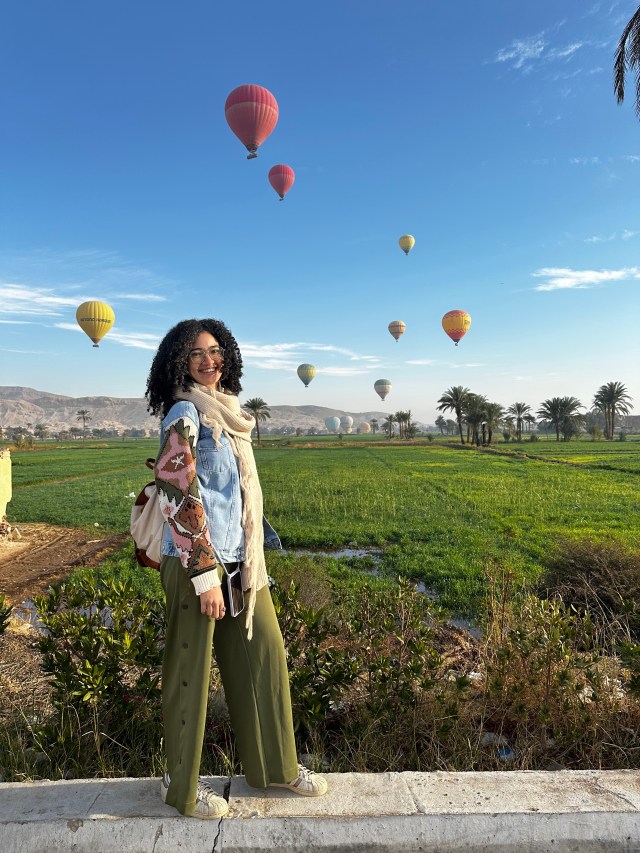
PRO TIP: Given that it’s probably the first thing tourists flock to as their buses arrive on the West Bank, the best time for a quick stop is right after sunrise. This way, you don’t just guarantee crowd-free photos, but also colorful hot air balloons in the background.
Other Things to Do in Luxor: More Attractions to Visit if You Have the Time
If you’re done with all the essential things to do in Luxor, and you have some extra time on your hands, here are some underrated attractions that are worth a visit:
#1 The Ramesseum (Temple of Ramesses II)
The Ramesseum is the funerary temple of Ramesses II, one of Ancient Egypt’s most powerful and famous kings. The temple, built in the 13th century BC from sandstone, later became a model for other funerary temples.
Much of the complex is now in ruins; however, it once boasted massive pylons, courtyards filled with columns, and more impressive architectural details. One of the most notable details is how the reliefs on the walls of the temple depicted Ramesses II’s military victories, including the famed Battle of Kadesh, as well as other religious and funerary scenes. The Ramesseum is a strong testament to Ramesses II’s legacy and the grandeur of Ancient Egypt’s architecture.
Opening hours: 6 AM – 5 PM
P.S. Opening hours may vary from one season to another, or during holidays and the holy month of Ramadan.
Tickets:
- Foreign adults: EGP 220
- Foreign students: EGP 110
- Egyptian/Arab adults: EGP 20
- Egyptian/Arab students: EGP 10
P.S. Prices are always subject to change, so always make sure to double-check the Ministry of Tourism and Antiquities’ official website before your trip.
#2 Medinet Habu (Mortuary Temple of Ramesses III)
The Mortuary Temple of Ramesses III, also known as Medinet Habu, is one of the best-preserved temples in Egypt. Inspired by the neighboring Ramesseum, the temple doubled as both the place for Ramesses III’s funerary ritual and for worshipping the god Amun.
Surrounded by huge mud-brick defensive walls, the temple’s layout reflects the politically unstable era during which it was built. Visitors can explore grand pylons, columned halls, chapels, courtyards, and much more inside the complex. The meticulous reliefs depict Ramesses III’s military victories, making the site not just an architectural masterpiece, but also a significant historical record of one of Ancient Egypt’s famed kings’ accomplishments.

Opening hours: 6 AM – 5 PM
P.S. Opening hours may vary from one season to another, or during holidays and the holy month of Ramadan.
Tickets:
- Foreign adults: EGP 240
- Foreign students: EGP 110
- Egyptian/Arab adults: EGP 20
- Egyptian/Arab students: EGP 10
P.S. Prices are always subject to change, so always make sure to double-check the Ministry of Tourism and Antiquities’ official website before your trip.
#3 Luxor Museum
If you have extra time and you’re a museum fan, then the Luxor Museum is absolutely worth adding to your list of things to do in Luxor. This small, yet mighty, museum offers a wonderful overview of ancient Thebes, known today as Luxor.
Opening hours: 9 AM – 1 PM and 5 PM – 8 PM
P.S. Opening hours may vary from one season to another, or during holidays and the holy month of Ramadan.
Tickets:
- Foreign adults: EGP 400
- Foreign students: EGP 200
- Egyptian/Arab adults: EGP 30
- Egyptian/Arab students: EGP 10
P.S. Prices are always subject to change, so always make sure to double-check the Ministry of Tourism and Antiquities’ official website before your trip.
#4 Mummification Museum
Even though it’s a small museum but visiting it is one of the coolest things to do in Luxor, as it offers impressive insights into the mystery of mummification in Ancient Egypt. There, you can see actual mummies of both humans and animals, as well as the tools used in the process.
Opening hours: 9 AM – 1 PM and 5 PM – 7 PM
P.S. Opening hours may vary from one season to another, or during holidays and the holy month of Ramadan.
Tickets:
- Foreign adults: EGP 220
- Foreign students: EGP 110
- Egyptian/Arab adults: EGP 20
- Egyptian/Arab students: EGP 5
P.S. Prices are always subject to change, so always make sure to double-check the Ministry of Tourism and Antiquities’ official website before your trip.
Things to Do in Luxor: Unique Experiences
#1 Hot air ballooning at sunrise

I know this sounds like an extra addition to your itinerary and budget, especially because it’s usually optional, but trust me, hot air ballooning is one of the most unforgettable things to do in Luxor. In fact, the whole reason why I went to Luxor the last time was that I wanted to cross this mindblowing experience off my bucket list on my birthday.
If you have any questions about this experience, I put together this whole guide for it, where I break down everything you need to know: ride details, safety, booking, you name it.
You can book a felucca ride on the Nile through Get Your Guide or Viator for trusted operators and a seamless booking process.
#2 Felucca ride on the Nile
You can’t go to Egypt without riding a felucca, the country’s traditional wooden sailboat. You can ride a felucca on the Nile in Cairo, Aswan, or Luxor, but if I were you, I’d ride it in all destinations. A felucca ride helps you see the city from a different perspective, a magical one.
You can book a felucca ride on the Nile through Get Your Guide or Viator for trusted operators and a seamless booking process.
Restaurants in Luxor: Where to Eat?
Unfortunately, as an Egyptian, I didn’t find Luxor one of the best destinations to try authentic Egyptian cuisine. However, there was this one restaurant on the East Bank that I kept going back to every single day of my last trip to Luxor. They don’t just serve delicious, authentic Egyptian food, but the atmosphere and vibes there were spot on! So, if you’re looking for a restaurant that serves food that feels like a warm hug from an Egyptian grandma, Sofra is the place to go!


Day Trips From Luxor
Dendera
One of the best things to do in Luxor, if you have extra time on your hands, is to go on day trips to visit nearby temples and archaeological sites. One of the most beautiful places you could visit is the Temple of Dendera.
Located in Qena, the Temple of Dendera was dedicated to the goddess Hathor, one of Ancient Egypt’s most celebrated deities. She was often associated with music, joy, dance, and motherhood; she was also dubbed the Lady of the Sky. Her temple, with its iconic entrance of six columns with Hathor’s head, is definitely one of the wonderful and best-preserved temples in Egypt, making it worth a visit.

Opening hours: 7 AM – 5 PM
P.S. Opening hours may vary from one season to another, or during holidays and the holy month of Ramadan.
Tickets:
- Foreign adults: EGP 300
- Foreign students: EGP 150
- Egyptian/Arab adults: EGP 20
- Egyptian/Arab students: EGP 10
- Extra tickets for Serdab and Panorama are available.
P.S. Prices are always subject to change, so always make sure to double-check the Ministry of Tourism and Antiquities’ official website before your trip.
Esna
This city of Esna was one of the most significant cities in Ancient Egypt, especially during the Roman and Ptolemaic periods. The Temple of Esna was dedicated to the worship of the ram-headed god, Khnum, the god of creation. The inscriptions in this temple and the beautifully lotus-decorated pillars are so vivid, which makes this temple so special.
Opening hours: 7 AM – 4 PM
P.S. Opening hours may vary from one season to another, or during holidays and the holy month of Ramadan.
Tickets:
- Foreign adults: EGP 200
- Foreign students: EGP 100
- Egyptian/Arab adults: EGP 20
- Egyptian/Arab students: EGP 10
P.S. Prices are always subject to change, so always make sure to double-check the Ministry of Tourism and Antiquities’ official website before your trip.
Edfu
The Temple of Edfu was dedicated to the famed god Horus and was partially built during the reign of Ptolemy III (246–221 BC) in 237 BC. The construction was then resumed 180 years later in the reign of Ptolemy XII (80–51 BC) in 57 BC.
It’s one of the most impressive and preserved temples in the country. Mostly because it remained buried under layers of debris for millennia, enabling its architectural and decorative elements to survive.

Opening hours: 6 AM – 5 PM
P.S. Opening hours may vary from one season to another, or during holidays and the holy month of Ramadan.
Tickets:
- Foreign adults: EGP 550
- Foreign students: EGP 275
- Egyptian/Arab adults: EGP 40
- Egyptian/Arab students: EGP 20
P.S. Prices are always subject to change, so always make sure to double-check the Ministry of Tourism and Antiquities’ official website before your trip.
Aswan

In my opinion, Aswan deserves a multi-day trip, usually paired with Luxor due to their close proximity. I personally love kicking off this trip in Luxor, where it requires so much energy, and ending it unwinding in beautiful Aswan, where the nature and hospitality win. However, history buffs who are planning a short trip in Egypt may be more inclined to spend more time in Luxor for the archaeological sites. In this case, if you settle for a day trip, it’s completely fine. You might want to spend the day exploring Nubian villages like Gharb Seheil or Heissa, visit the mesmerizing Philae Temple, or go all the way to the famed Abu Simbel.
Hurghada
Egypt is a massive country, and it’s bigger than what most people think. That’s why planning your itinerary in a way that makes sense geographically is important. So, visiting Hurghada after Luxor, or vice versa, is a good idea if you’re planning to go to Hurghada as well. If not, and you only have one day, then a day trip from Luxor to Hurghada might be a wise choice if you want to take a break from the scorching heat and go snorkeling in the Red Sea instead.
Closing Remarks
If you’ve made it this far, congrats; you’ve only just begun to scratch the surface of Luxor. To dig deeper and really learn about Ancient Egyptian history, this list of things to do in Luxor is just the beginning. Let me know in the comments if Luxor, or Egypt in general, is still on your bucket list.
Don’t Forget Your Travel Insurance!
Travel (solo or not) isn’t always rainbows and butterflies – things might go down south sometimes. You might fall ill or lose your luggage, and that’s when you’ll thank me for having your back covered with travel insurance.
SafetyWing offers different travel insurance packages, tailored to your needs, but their Nomad Insurance is my favorite option.
This travel medical insurance is perfect for frequent travelers. It covers lost checked luggage, travel delay, doctors, hospitals, and more. It even covers the COVID-19 emergency quarantine period if deemed necessary by a physician.
Explore SafetyWing’s Nomad Insurance Essential and Complete plans now.
OR REGISTER FOR FREE!
Booking a trip soon? Here are some useful travel resources:
- Book your flight with Skyscanner, Kiwi, CheapOair, or WayAway.
- Book your hostel with Hostelworld.
- Book your hotel with Booking.com.
- Get your travel insurance with SafetyWing.
- Hire a car with Skyscanner, Discover Cars, Rentalcars, or AutoEurope.
- Book your tours with Get Your Guide, Viator, Tiqets, or Klook.
- Download an eSIM from Airalo or Jetpac.
- Check out my trip planning tools for more travel resources.
Sharing is caring!
You might also like:
- Sleeper Train, Talgo Train, or Flight – How to Go to Luxor/Aswan?
- Hot Air Ballooning in Luxor: The Best Sunrise in Egypt
Meanwhile, if you like my content and would like to see more of it, subscribe to my newsletter here.

Nadine is an Egyptian curly-head who decided to quit the norm because it just doesn’t suit her. She ditched her 9-5 as a magazine editor to pursue her dream of becoming a full-time digital nomad and to inspire aspiring travelers to embark on their own solo adventures.